


Failed To Prepare? Prepare To Fail - Lessons From The Antarctica
- Jon Batty

- Nov 12, 2025
- 8 min read
Failed to prepare? Prepare to fail...
We’ve all heard this statement before, many times over.
I first heard it at school from one of my legendary teachers called Frank (ex–French Foreign Legion). Absolute top bloke and awesome mentor who helped me prep to join the Royal Marines.
I took that lesson forward and always strived to ensure I nailed my prep.
Obviously, this was compounded when I joined the Marines, with very steep learning curves and extremely high standards. But despite knowing the need to prepare, your preparation will always be limited by your knowledge and experience. And both of those are limited by what you’ve done before, and by the people you’ve had around you. You can only plan for what you know to plan for.
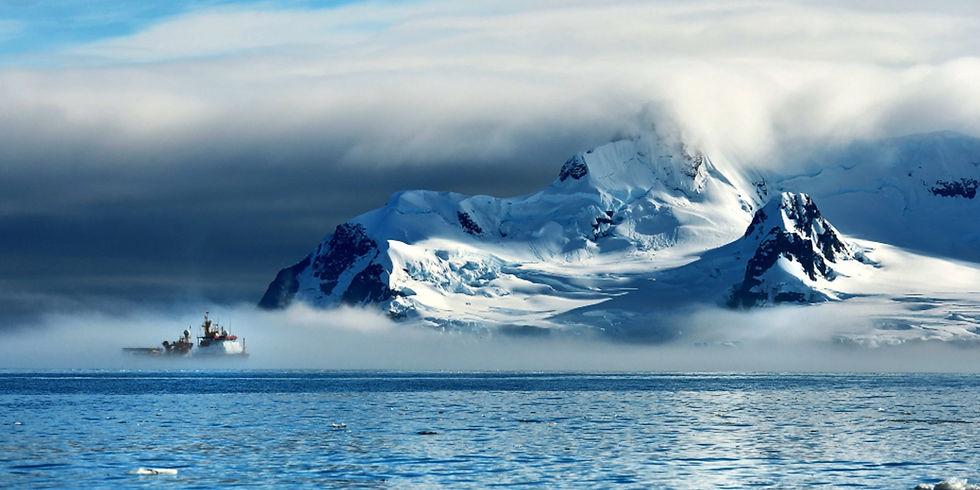
In Jan 2012 I joined a ship called HMS Protector to head down south to Antarctica. This was my first stint on this ship and I was drafted on there for six months to assist the Royal Navy as a “cold weather expert” on the ground. At that point, I’d only done a short stint in Norway to learn the basics of survival and mobility in Arctic conditions, along with several weeks of alpine mountaineering in Switzerland. I certainly wouldn’t have classed myself as an "expert" by any means.
However, it was more experience than most of the Royal Navy lads at the time, who were very used to being on board ship but had zero experience of operating in those sorts of conditions on land.
We also had members of the British Antarctic Survey (BAS) team join us from the Falkland Islands to head down to Rothera (one of their bases). It was clear from the get-go they were the true cold weather experts. During the trip down south, we headed out to Elephant Island, where the BAS team were set to carry out a few survey tasks.

Myself, a couple of other Marines and a handful of Navy ranks joined them for this trip. We took what we thought was sensible enough food and supplies for the duration plus a few extra days. The BAS team, however, turned up with a mountain of kit, an entire month’s worth of food, fuel, water and spare batteries.
We thought it was mega excessive. Honestly, it felt like they were prepping for the next Ice Age. And of course, we were the ones who had to help lug it all off the boats and up the beach far enough from the shoreline to avoid getting soaked when the tide came in. We muttered about it at the time but we’d soon learn exactly why they did it that way.

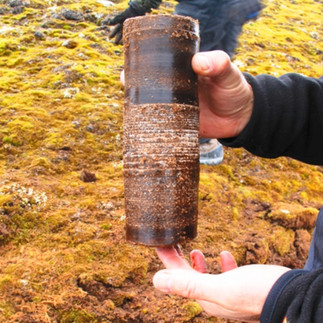
The aim of the trip was to spend three days on the island. The BAS team were heading up into the hills to collect moss samples, apparently key indicators for climate change. My job was simple: carry their kit. As a Marine fresh out the box, this was right in my wheelhouse. That, and holding the drill while pretending I understood what they were doing.
The job went smoothly enough. The team collected their samples and we made a few runs back and forth to camp. In between, we explored the island which was windswept, brutally beautiful and eerily silent except for the crack of glaciers and the squarks of penguins.



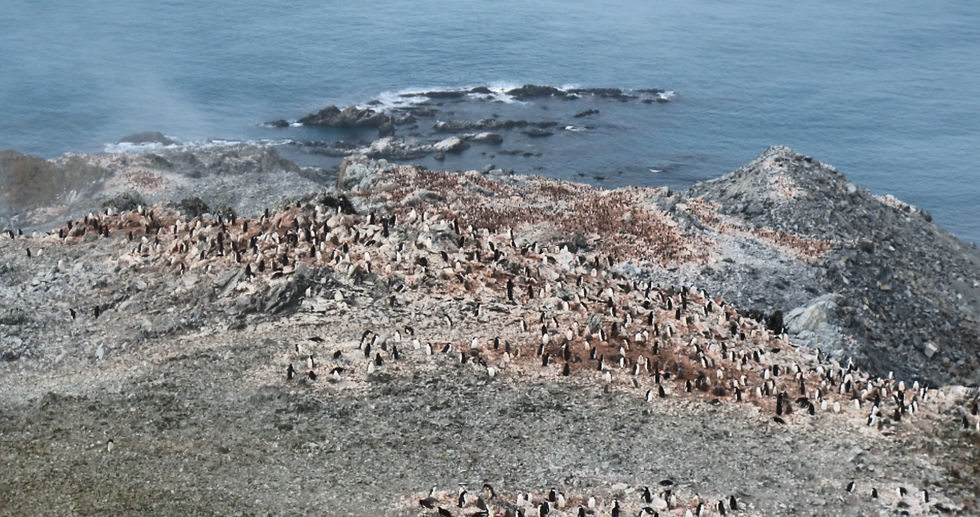
You can always find the penguin colonies easily, just look for the huge red-stained land where they all shit on each other. It’s one of those scenes that’s both funny and grim at the same time.
A couple of close calls happened along the way a few daft mistakes from overconfidence but I’ll save those stories for another blog. For now, this one’s about how our lack of preparation nearly landed us in serious trouble.
As the expedition wrapped up, we radioed HMS Protector to arrange pickup. Everything seemed fine. The weather was holding, visibility was decent and we were packing up, ready to go.
Then the environment started doing what Antarctica does best... changing fast.
To one side of the island, a massive glacier was calving big chunks of ice breaking off and crashing into the sea, echoing like thunder. At first, we didn’t think much of it. But slowly, the chunks began drifting in, joining the sea ice that had been forming offshore. Within hours, it started to close in along the beach.
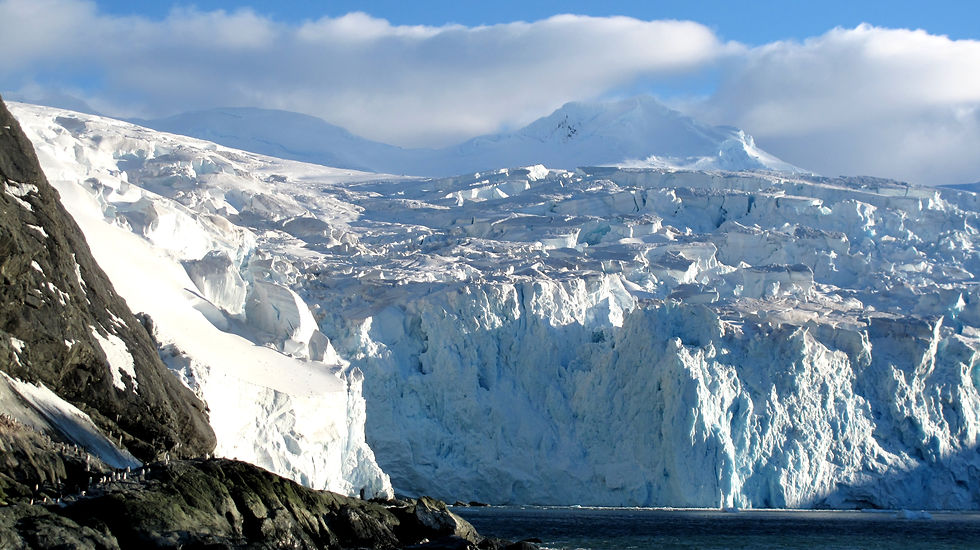
Huge slabs of ice the size of small cars began stacking up, grinding against one another. We hacked at them with paddles and ice axes, tried pushing them aside, but the more we moved, the more came in. The wind was picking up now, the sea was getting choppier and each wave dragged in more ice.
That’s when the comms crackled “Boat’s on the way. Stand by for pickup.”
We all looked at each other and at the chaos unfolding around us. This was going to be interesting.
I have added a photo below from Polar Cruises as obviously I don't have any visuals for you of this hectic time. It would have made for a good laugh in hindsight.

The first boat in was a medium inflatable: a MIB. It came powering toward us, the cox’n (boat driver) trying to find a line through the ice. Every few metres, the hull slammed against floating slabs and you could see him beginning to panic.
He got close enough for us to see the strain on his face, jaw clenched, eyes darting between waves. “Let’s make this quick!” he shouted.
The plan was simple really, load two people and some kit, shuttle them back to the larger RIB waiting beyond the ice field. Easy enough in theory until a rogue wave hit.
The MIB turned slightly side-on just as a block of ice the size of a sofa was dragged under it by the backwash. The boat lifted, twisted and in one horrible motion flipped clean over, trapping two of the lads underneath.
Instant chaos.
“Man overboard! Man overboard!” someone yelled. Two dry-suited figures surfaced, gasping, trying to right the boat as chunks of ice slammed into them.
From the beach, we sprinted toward the water hacking away with paddles, ropes, anything to reach them. The sea was churning freezing spray in your face, the sting biting through every layer you had.
Then the larger RIB moved in to assist. She was a beast with twin engines, reinforced hull and she tried to punch through the ice to pull the MIB upright. The cox’n came in hot, lining up to get a rope across.
That’s when it all went sideways.
A submerged block caught the RIB’s hull just as a wave lifted her. The impact threw the cox’n forward off the console. He hit the deck hard, slid toward the side, and the next wave rolled the RIB over toward him a big heavy boat now teetering on top of a mess of ice and seawater.
H, a Navy diver (absolute legend of a bloke) was on the shoreline with us. He saw it unfolding and didn’t hesitate. He sprinted into the surf, waist-deep, water exploding around him, grabbed the cox’n by his shoulder harness and yanked him backwards just as the RIB slammed down.
The hull smashed into a block of ice where the cox’n had been half a second earlier. The crack echoed across the bay. Everyone froze for a moment, before H shouted, “He’s good! He’s good!” and dragged him clear.
The cox’n was shaking. H just gave him a nod that classic calm, understated “no dramas” kind of look. But every single one of us knew how close that had been.
The comms came through from the ship again:
“Stand by. We’re sending in the big RIB.”
A few of us laughed. Of course they were. Because what we really needed right now was a third boat to join the graveyard.
Sure enough, a few minutes later, we saw her powering through the chop a proper lump of a RIB. You could hear the engines long before she came into view. The driver, a grizzled old bloke, was hanging onto the console like he was riding a bull.
He came hammering in, throttling hard, trying to thread the needle through the ice field. Every wave threw the boat airborne before it slammed back down, sending walls of freezing water over the crew. It was chaotic to say the least.
They managed to reach the edge of the ice, shouting orders through the radio.
“We’ll lash the RIB first, then drag the MIB out behind it. Keep tension on that line!”
It was a sight - three boats now, all tangled in ropes, engines screaming against the tide, chunks of ice the size of Fiat 500s smashing against the hulls. The waves were throwing everything around like toys. The air stank of diesel and salt.
At one point, the larger RIB’s line went slack just as the MIB shifted, causing both to swing side-on. For a second, it looked like the whole lot was going to pile up into one frozen dog’s dinner.
We just stood there on the shore, ropes in hand, pulling like mad while shouting over the wind.
Someone said, “We’re one more boat away from having to build a bloody bridge.”
The ridiculousness of it all kept morale just high enough to stop anyone losing it completely.
After what felt like forever, arms numb, legs dead, soaked to the skin the bigger RIB finally managed to get enough power to yank the smaller boats clear. You could see the engines straining, exhausts roaring and the ropes groaning under the load.
And then, slowly, it started to work. The line went tight, the MIB came free with a crack and a cheer and everyone just dropped to their knees laughing and swearing at the same time. It was that kind of moment relief mixed with disbelief.
We turned the ropes and MIB into a human conveyor belt, hauling kit and people across the ice, one miserable trip at a time. The waves kept hammering us, the tide still rising and the wind was now cutting sideways, stinging every bit of exposed skin.
H was back in the water again, directing the loads while shouting over the wind. The BAS team, as calm as monks, sat watching in the background. You could tell this wasn’t their first rodeo.
By the time the last load made it off, the beach looked like a battlefield broken ice everywhere, scraps of rope, boot prints frozen into slush. We were absolutely wrecked.
The bigger RIB finally roared away, dragging both boats behind like trophies.
Later, in the drying room back on board ship, steam poured off everyone’s kit. Someone cracked a joke, “That went well!” and the whole place erupted into tired laughter. That’s how it always goes after something like that: the humour comes out, but underneath, you know damn well how close it was.
If that ice had come in quicker and we hadn’t had the BAS team there to feed us supplies, we’d have been in real trouble.
That’s when the moral hit me hard, we can only prepare based on what we know and that’s not always enough.
The BAS team didn’t pack thirty days of rations because they were pessimists, they did it because they’d been caught before. They’d seen what happens when you underestimate the environment.
We were fit, strong and well-trained but fitness doesn’t beat experience, it just lets you survive the lesson long enough to learn it.
It’s the same in health and fitness. You can wing it follow random plans, guess your nutrition, train hard but without direction - it might work for a bit. But eventually, life throws you your version of sea ice: stress, setbacks, fatigue, injuries, burnout. That’s when you realise your plan only covered what you knew, not what you didn’t.
Having someone who’s been through it, who’s made the mistakes and knows what to watch for. That’s what a good coach gives you.
Preparation doesn’t make you invincible but it makes you ready. Experience doesn’t remove risk, but it makes you adaptable. And being willing to listen to those who’ve already failed… that’s what keeps you on track without having to learn the hard way.
Because whether it’s Antarctica or your next training block if you fail to prepare properly, you’ll make avoidable mistakes… and these will not be very comfortable.
